

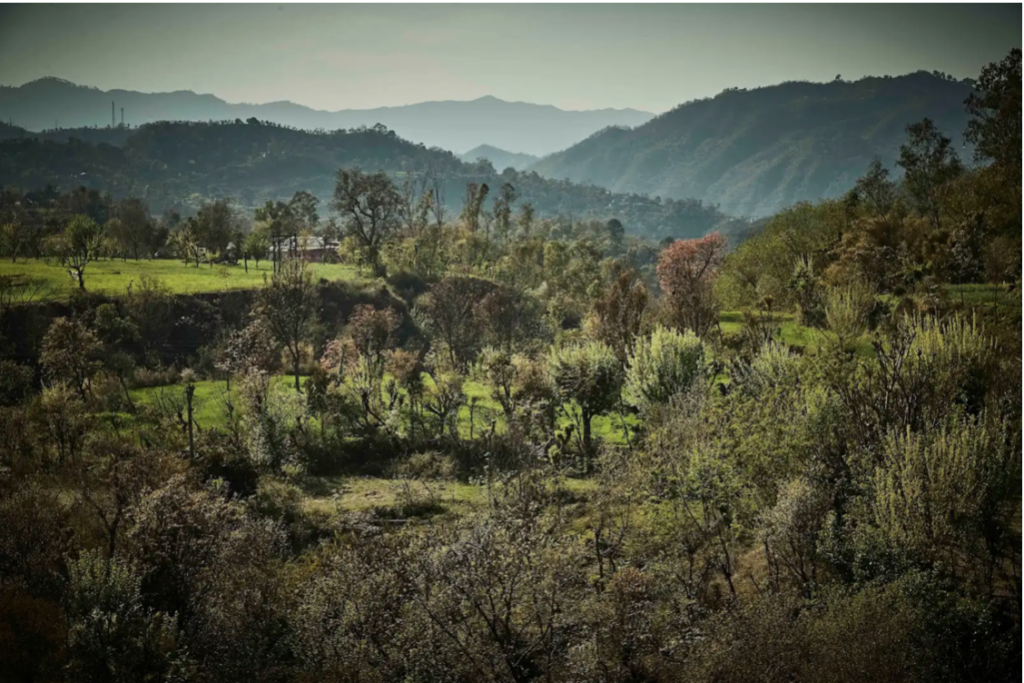
Photo Courtesy: Mark Katzmann
Restoration is often measured in hectares treated, trees planted or interventions completed. But for local communities who depend on these landscapes, success is experienced differently: in water available through the summer, fodder through the dry season, more resilient farming systems, and the ability to sustain livelihoods without distress migration. Rethinking restoration success means looking beyond activities and ecological indicators to the changes communities value, the evidence they recognise, and their ability to steward landscapes over time.
Success begins with what communities value
A landscape cannot be considered successfully restored simply because a certain number of trees have been planted or hectares treated. We also need to understand whether these interventions have improved access to resources, strengthened livelihoods, and addressed deeper inequities in who can access, use, and benefit from shared resources.
In this lies another important question: which community members are defining success?
Women, landless families, farmers, and forest-dependent households may have very different relationships with the same shared landscape, and therefore different priorities for its restoration. For some, improved access to water may be most important; for others, access to grazing land, forest produce or agricultural resources may matter more.
Local communities, especially women and marginalised groups, need meaningful opportunities to influence decisions about how landscapes are managed, which resources are prioritised, and how benefits and responsibilities are shared. Their participation in governance institutions is therefore an outcome, not merely a consultation requirement. Governance, thus, is both a precondition for and an outcome of restoration; it is an early indicator of whether ecological and livelihood gains can be sustained. Planting trees or undertaking soil and water conservation works may initiate change, but lasting recovery depends on whether communities have the authority, institutional capacity, and resources to steward their landscapes.
Restoration success, in this sense, is also about strengthening the institutions and collective arrangements through which communities manage shared resources.
The evidence of recovery is often visible first to communities
If restoration is to be responsive to community priorities, we also need to rethink how we understand and measure change.
Ask farmers what has changed in their fields, and they may not begin with a graph or a set of technical indicators. They may hold the soil and describe it as softer or darker, point to the presence of earthworms, or talk about the return of birds, bees, and farm-friendly insects. They may describe how their crops performed during a dry spell, whether they needed fewer external inputs, or how the land responded to heavy rainfall.
These observations are important starting points for understanding ecological recovery. Similar patterns can be seen in forest regeneration and pastureland restoration, where communities notice changes in vegetation, water availability, biodiversity, and resource access through their everyday interactions with the landscape.
Such local observations can also provide early signals of resilience. Communities assess whether farming and restoration practices are working by observing how landscapes respond to dry spells, cyclones and other stresses, alongside changes in yields and input costs. These signals help them understand what is changing, what is working and where practices may need to be adjusted.
The experience of the Andhra Pradesh Community-managed Natural Farming (APCNF) programme, a collaborative partner of Common Ground, offers an interesting example. The programme has drawn on a substantial body of research, with 114 formal research studies, including 70 external studies. It has also developed a community research vertical, recognising farmers as scientists and knowledge producers in their own right. Around 700 farmer scientists are involved in this effort.
The value of this approach lies not only in generating evidence, but also in making findings available to farmers relatively quickly and connecting them to decisions and practices on the ground. Farmers can understand what is changing, interpret what the findings mean for their own contexts, and use that knowledge to inform their choices. This has contributed to the programme’s wider spread, even without financial incentives for farmers to transition to natural farming.
The larger lesson from this experience is that communities should be interpreters of evidence, not merely data collectors. They hold detailed, place-based knowledge of how their landscapes are changing, and this knowledge should find its way into formal planning, monitoring, and evaluation systems.
At Common Ground, we are working with multi-actor platforms and using digital tools to support community-owned information systems and trackers. These bring local knowledge together with other evidence, so communities can understand change, interpret findings, set priorities, and act. Information should strengthen community authority and decision-making, not simply serve external reporting requirements.
Such systems can help communities track the trajectory of change rather than look at restoration as a series of disconnected activities or isolated outcomes. They can also help connect observations at the farm or village level with changes across a larger landscape. Thus, while quantitative indicators and scientific assessments remain essential, they need to be complemented by the knowledge and observations of those who interact with landscapes every day.
From individual interventions to landscape-level change
Restoration interventions often begin at the level of an individual farm, plot or village. These are important entry points for action, but they cannot be treated in isolation from the larger landscape.
A landscape refers to the connected mosaic of farms, forests, grazing lands, water bodies, and settlements that share ecological processes and are used and governed by many communities and institutions at once.
Farming systems, forests, grazing lands, water bodies, and biodiversity are interconnected. Changes in one part of a landscape can have consequences for others. A farm-level intervention may improve soil health, for instance, but its long-term benefits could depend on the condition of surrounding commons, water systems, and forests. Similarly, a restored commons in one village, surrounded by several villages where natural resources continue to degrade, does not amount to a restored landscape.
The need of the hour is to bring community-defined priorities together across villages and connect them to wider landscape plans. Multi-actor platforms can play an important role here by enabling communities, civil society organisations, government institutions, researchers, and other stakeholders to coordinate priorities and action.
Crucially, these priorities must also find their way into institutional plans and public programmes. Evidence matters when it reaches the budget: when community priorities shape plans, convergence, and funded action. Restoration cannot remain dependent on temporary projects or isolated interventions; its long-term sustainability requires investments in people, institutions, and public systems that can continue to support landscape stewardship beyond the duration of a particular programme. Public and private funding for restoration must support the institutions and people who sustain it, not only the physical activities or assets created through it.
As this work evolves, we need to start asking whether restoration activities have changed the trajectory of a landscape. Are natural resources recovering? Are livelihoods becoming more resilient? Are community institutions better equipped to manage shared resources? Are different groups within communities able to influence decisions? And are public systems and investments supporting these changes over time?
This means placing community-defined priorities, governance, and the ability to steward landscapes at the centre of how we think about restoration. It means treating local communities not just as participants in restoration programmes, but as decision-makers, knowledge holders, and long-term stewards of the landscapes they depend on.

0 टिप्पणियाँ