
by Koushik Yanamandram
After a couple of hours of a drive, on the highway connecting Bengaluru with Tirupati, I reached a sudden narrow road, hidden under a huge raintree, where a few girl students from nearby villages were waiting for a bus or auto rickshaw to reach their school. These morning scenes quickly turned into a bumpy rural road winding down around hillocks and tanks cruising through a couple of small villages, before I reached Minjenahalli, where Asha akka (Akka means ‘elder sister’ in Telugu, lovingly used to call any elder woman) lives with her husband, Srinivasa Murthy. They welcomed me warmly with morning breakfast and coffee. Srinivasa Murthy was narrating proudly how Asha akka has started the work around the villages conserving all the water bodies that sustain them. He takes me to their terrace to proudly show me the landscape and the lake she managed to desilt and clean up for usage. Asha akka and I venture out on our visit to all the lakes she has helped mobilise resources to de-slit and make usable.
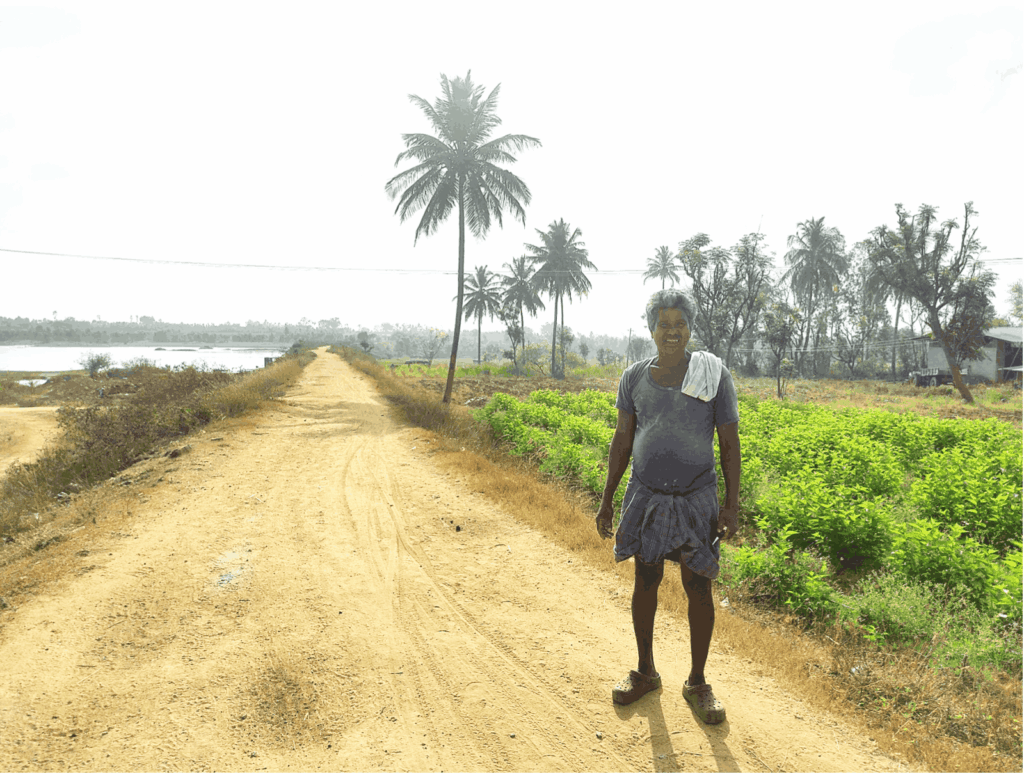
Before we start our journey, we bump into a happy farmer, Nagaraju, who greets Asha akka, who also later shared about how beneficial this lake restoration has been for him that he
reaps two crops every year now even in a relatively dry season. Farmer Nagaraju shares how more lakes in the region, if restored, can increase their resilience to the increasing temperatures and heat, along with the water woes. He wishes that more support would come to their village and to Asha akka to restore more such lakes in the region.
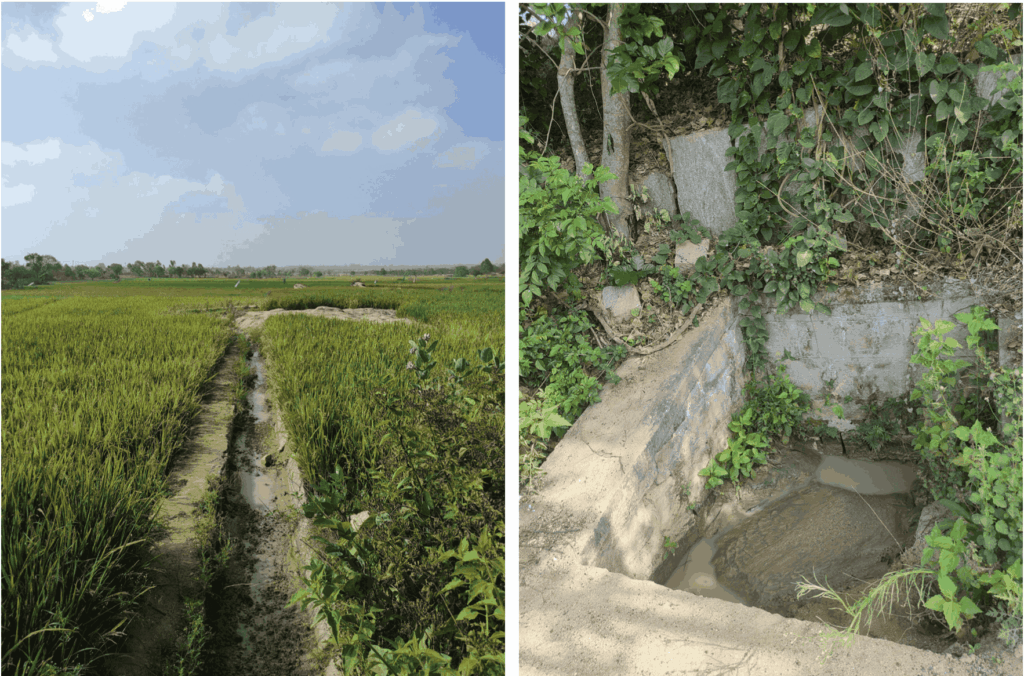
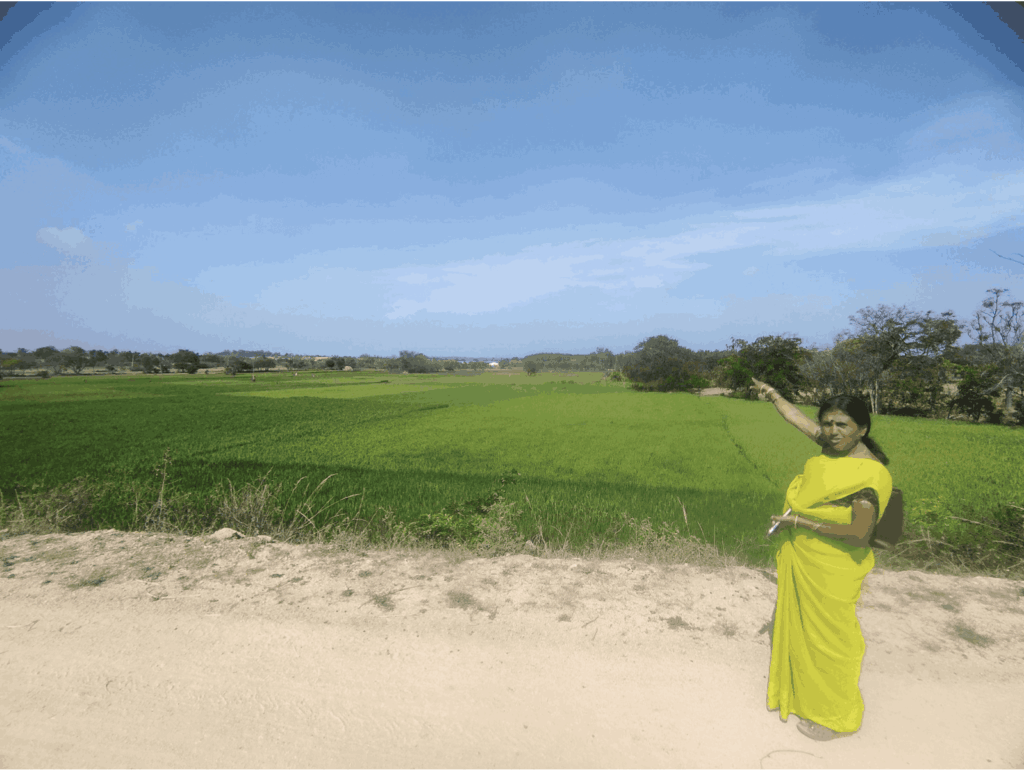
We go over to another lake, the second one that surrounds her village, where she explains to me how channels were built many years ago, that allows the water to downstream lands from where it is stored and stopped on one side by a large bund, over which there is a path for vehicles as large as a tractor with trolley to pass. Sometimes these channels get silted and blocked and that reduces the flow of water downstream making it difficult to access water for irrigation for fields downstream. One can notice the lush green paddy fields downstream of the lake, the second crop for many farmers increasing their source of income for the year. The Mitturu Panchayat has around 1282 households and 26 lakes in total out of which Asha akka has helped rejuvenate 10 of them already in the last 2 years. Her aim is to cover all the 26 lakes in another couple of years. I asked how much time would it take and resources for doing that. She mentions that if a team is built with more funds, it can be achieved in less than a year. The Panchayat office is cooperative now after repeated attempts to bring their cooperation for the work. She explains that dealing with the Panchayat office meant
that she faced opposition in the beginning, questioning her intent and capacity to do this work. She has been able to rally people around by demonstrating it for her village which is surrounded by three lakes.
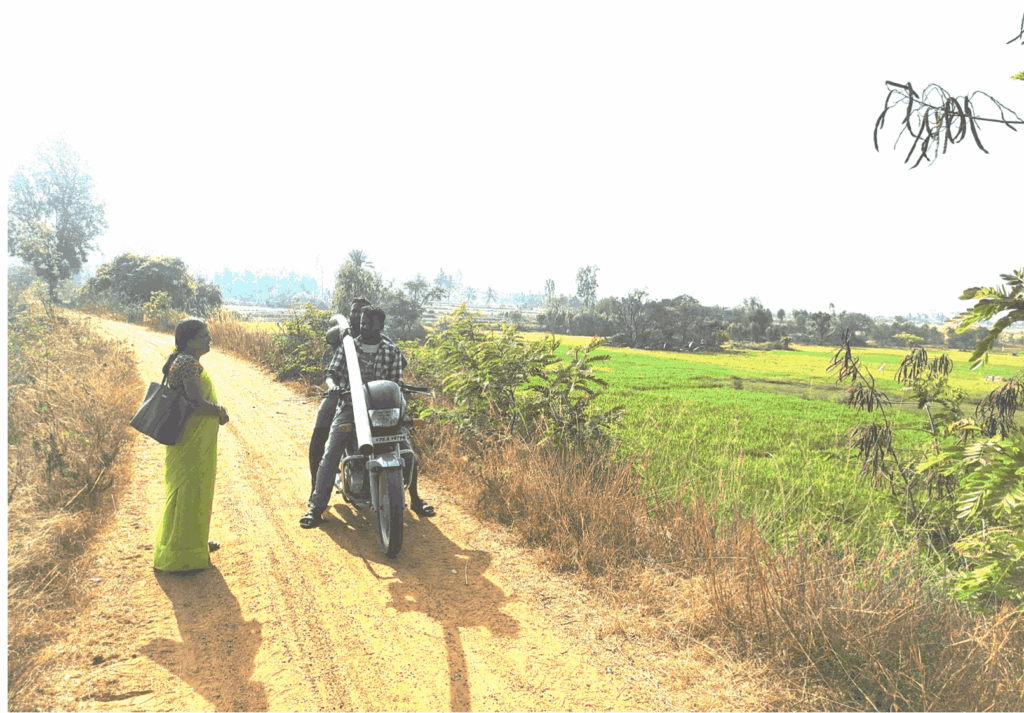
It is not enough to just rejuvenate the lake, the governance is the tougher part. The toughest part is getting the cooperation from everyone including the panchayat. She doesn’t hesitate questioning anyone who misuses the water availability. In many cases some farmers use more water than others, in the upstream, depriving the farmers downstream of the water for the second crop. I saw her frankly questioning the farmers who attempt to use more than their share of water in the region. Governing the Commons is key to the balance of water availability in the region, according to her.
She gets the necessary help in scientifically rejuvenating the water from Vishwanath S, a water resources expert, the founder of Rainwater Club, Director of Biome Environmental Solutions, and Trustee of Biome Environmental Trust, in Bengaluru. He explained to me about the scientific process Asha akka follows under his guidance and support, “De-silting is never done without an assessment of whether the tank needs it or not . Usually we desilt
only 1 metre depth of silt accumulated over decades . The silt reduces holding capacity of lakes and also prevents recharge of the shallow aquifer. De-silting is also not done indiscriminately but in a structured fashion of 1 Hectare by 1 metre as a module. Removing silt is an age-old practice”.
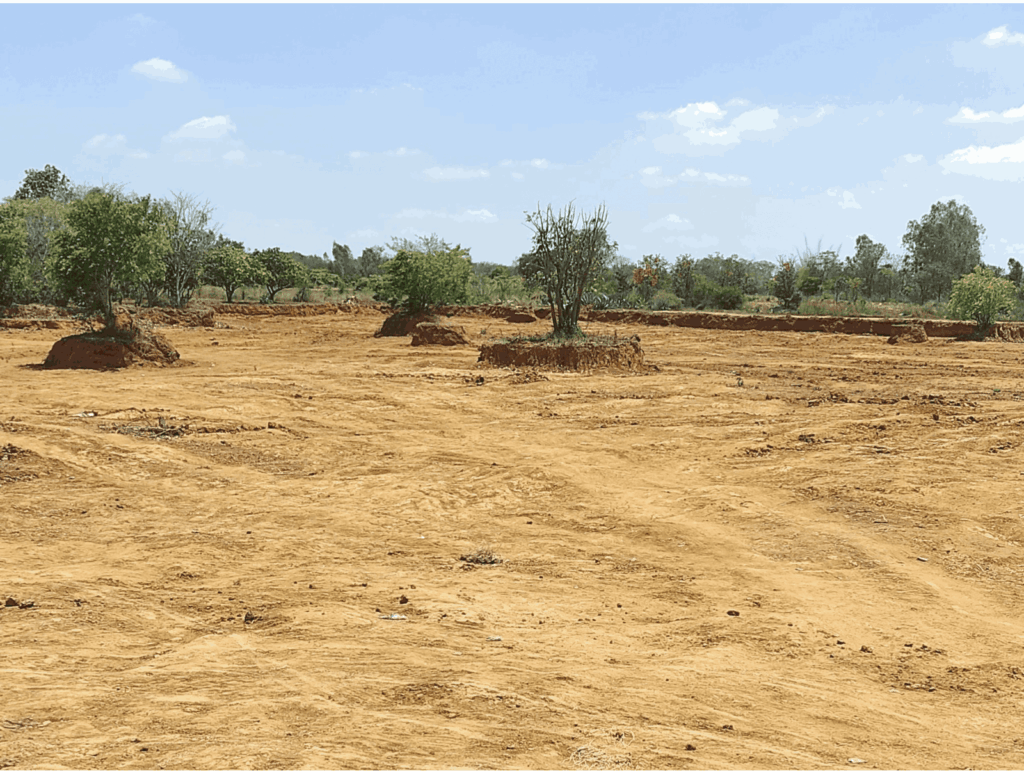
A de-silted lake waits for the next rains to get filled, and the water then not only lasts for the whole year, but also recharges the aquifers in the region, providing drinking water to the households through boring pumps and open wells dug across the landscape. The silt has unique properties that enhance the soil fertility increasing the productivity of the crops.
Asha akka was born in Shivamogga, one of the rainiest places in Karnataka, tucked in Western Ghats region, where she grew up and completed her studies, aspiring to be a teacher. Married into a family far away from her hometown, near Kolar, one of the driest places of Karnataka, she accepts her destiny. She has spent early years of her work with an NGO locally where she developed her skills of working with the community, mobilising and reporting on social development. As a kid, she enjoyed mingling with her neighbours, helping them and as a young teenager she recalls how she was a favourite child in her neighbourhood for many families. She enjoys walking around the panchayat, meeting people, also because the public transport availability is less in the region and she hasn’t learnt to use a two wheeler to go around.
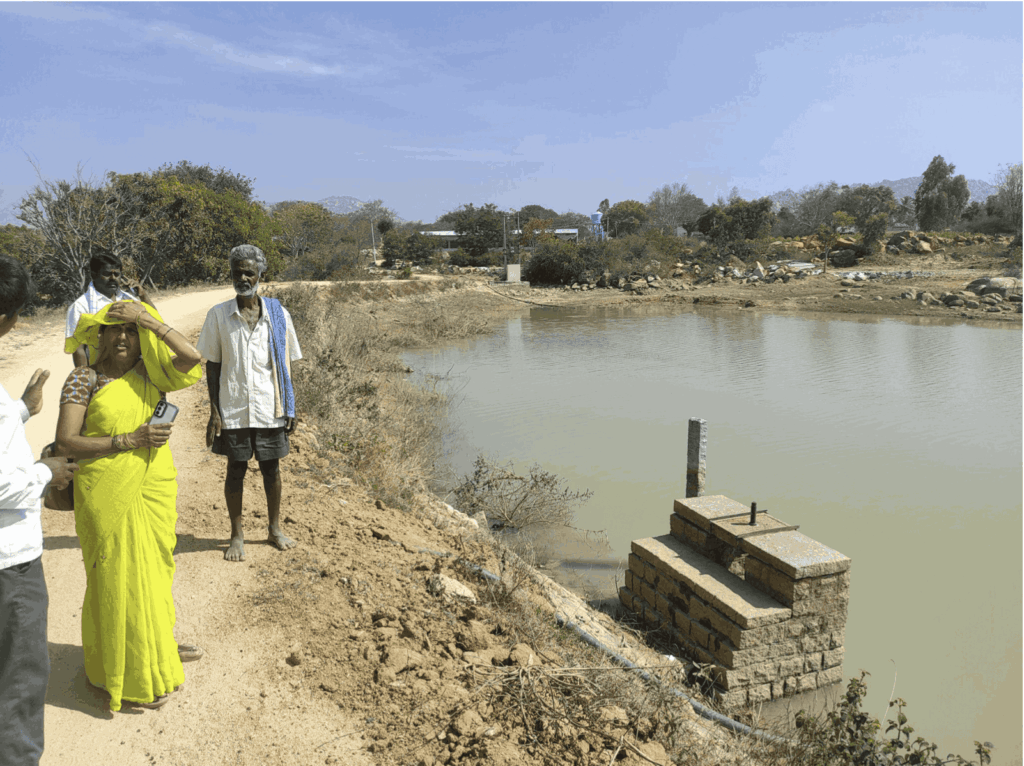
Each lake has few inlets and few outlets. Each outlet is usually operated using a sluice gate that villagers use to let water to the fields downstream. The maintenance of these gates is governed by the Panchayat office. In many cases, she had to mobilise support to repair them and maintain them from CSR funds from some of the companies based out of Bengaluru. As much as she is proud of her work, which is quite visible through the landscape of lush green paddy fields, she also is worried that a lot of support that this kind of work deserves from the local government is lacking. It is people at the end of the day who have to demand for utilisation of tax payers money she insists. A panchayat leader who accompanied us while visiting the lakes, declares, “if it is not for someone like Asha akka, we won’t be able to maintain and upkeep these resources”.
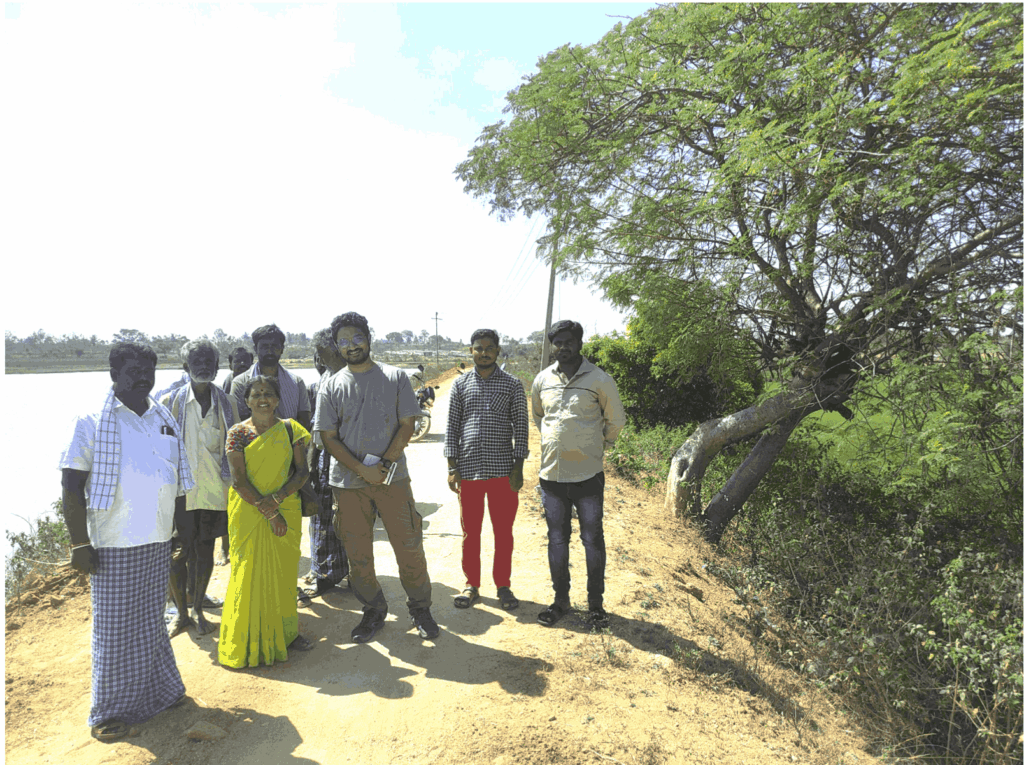
On a hot day’s noon, where the Sun is not kind, when she inspects the lake, local farmers, youth and a panchayat member pay a visit, and discuss the issues around upkeep of the lake after rejuvenation. There are plenty of open wells near the lake scattered across the landscape, where the water table has risen to levels sufficient for the nearby farmers to utilise them for their irrigation purposes. However, many open wells are silted and neglected. She urges the farmers to get them ready for the season to come for more irrigation and morecrop coverage. Many of them praise her efforts and their treatment towards her with respect and affection, goes on to say that her work has deeply impacted them.
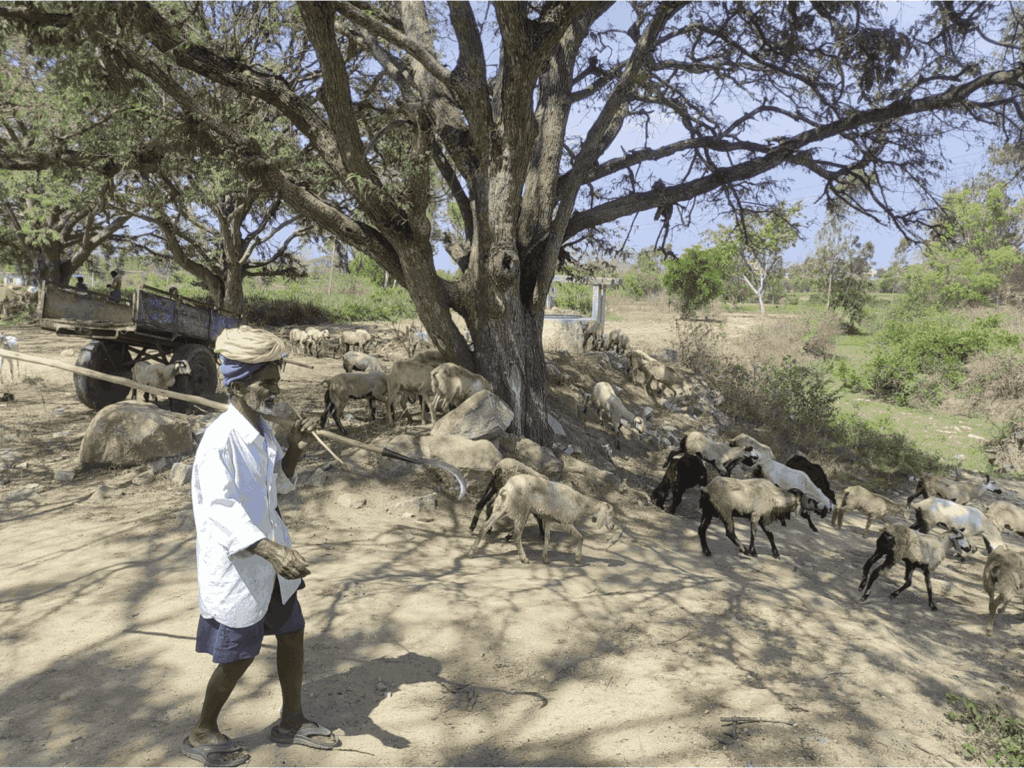
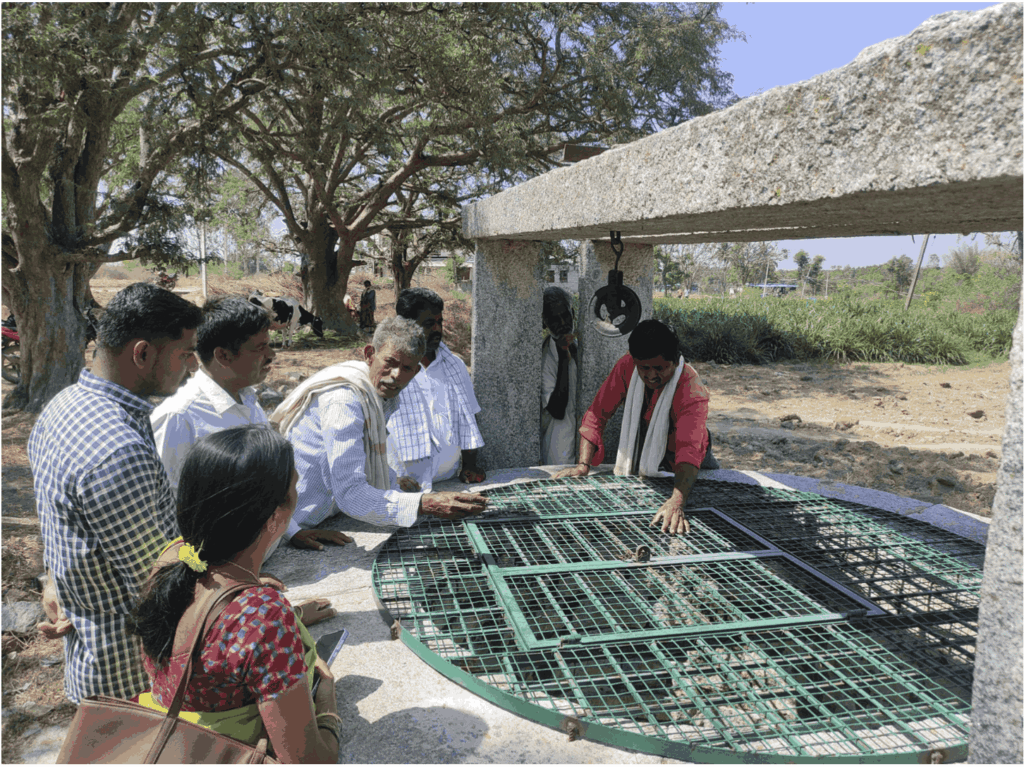
The water from the lakes not only support farmers and the households, but also the herds of sheep reared by the pastoral community in the region. The grazing grounds and the water nearby becomes critical for their livelihoods. The old man guarding his flock of sheep also recognises her for her efforts and waves a goodbye as he walks past us as Asha akka stops at an open well which has been cleaned up and readied for use by her efforts in a village in her Panchayat. The open wells near the residential area are primarily used for domestic uses including washing clothes and utensils, cleaning household surroundings, bathing and feeding water to cattle etc. the nearest households to the well, who draw water from it are responsible for their upkeep. A volunteer from the village who often works with her on the lake rejuvenation project, goes around once in a while checking on the wells and lakes in the panchayat. In some cases, the panchayat also has utilised the MGNREGA program to get some work done while offering a day job to many in the village who are registered as workers under the scheme with the government. But this hasn’t seen much success due many loopholes being exploited and bureaucratic hurdles. But this didn’t stop Asha akka from doing her work.
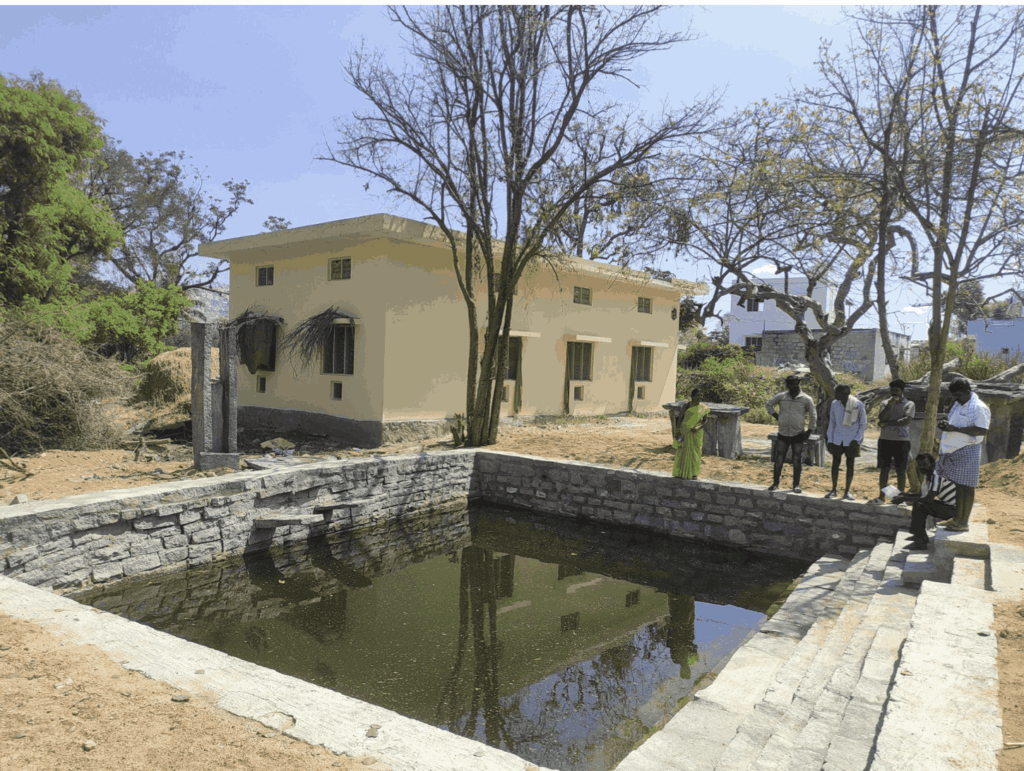
Another important water body in a village is a ‘kalyani’, a sacred pond built near a temple where all the village’s festivals are celebrated. The pond is seen as a purificatory space for many rituals and festivals. In many villages, the kalyanis also face the same fate as lakes and open wells, silted and buried in dust. Asha akka has demonstrated rejuvenation of one such Kalyani in her neighbouring village using CSR grants and has been able to revive the structure to its ancient glory.
As the day goes by, Asha akka takes me to the third lake of their village which was rejuvenated and is one of the most peaceful places to spend time around. A lot of biodiversity of birds is quite visible and audible around the lake.
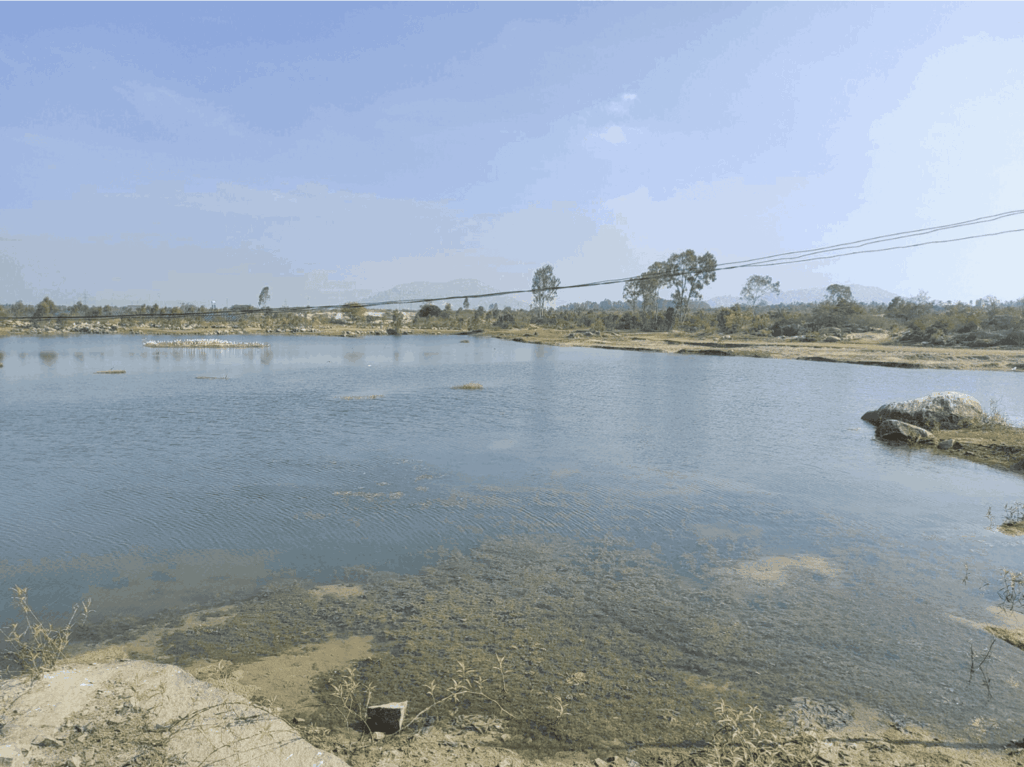
Asha akka hopes that one day when the panchayat’s all lakes are rejuvenated, she can work on the next panchayat from where she already has started getting calls from farmers. All the work of desilting is accomplished using the earth mover equipment and tractors to carry the silt loads to be distributed to farmers. She says that the contract for this work is always given to the contractors belonging to the panchayat, and never outsiders. The local economy has to thrive, the money generated has to be for the villages around and not for the contractors from the city, she says.