

The need
As macro-drivers outpace local communities’ ability to respond, it is critical to find ‘common ground’; to address differing mental models, foster a plurality of solutions and approaches, translate innovative thinking into practice, and co-create responsive social infrastructure with communities to catalyse change at an unprecedented pace and scale.

The Commons – covering one-fourth of India’s landmass – are degrading at a rate of 4% per year. This poses serious risk for those who depend on them, specially forest dwellers, livestock keepers, tribal communities, and women.
These groups rely on the Commons for food, water, fuel, grazing, and income. As these resources shrink, the effects are clear: declining incomes, growing inequality, deepening climate vulnerability, and increased risk of is placement. Customary self-regulation and community – led systems of resource use – especially in tribal areas – are eroding.
These systems are not only rooted in ecological balance but are key to strengthening democratic governance at the local level. They must be made more inclusive and recognised for their potential to inform practices in other areas such as education and health.

Population Dependence
Over 350 million rural poor in India rely on common property resources for their livelihoods

Economic Value

Land Area
Understanding the barriers
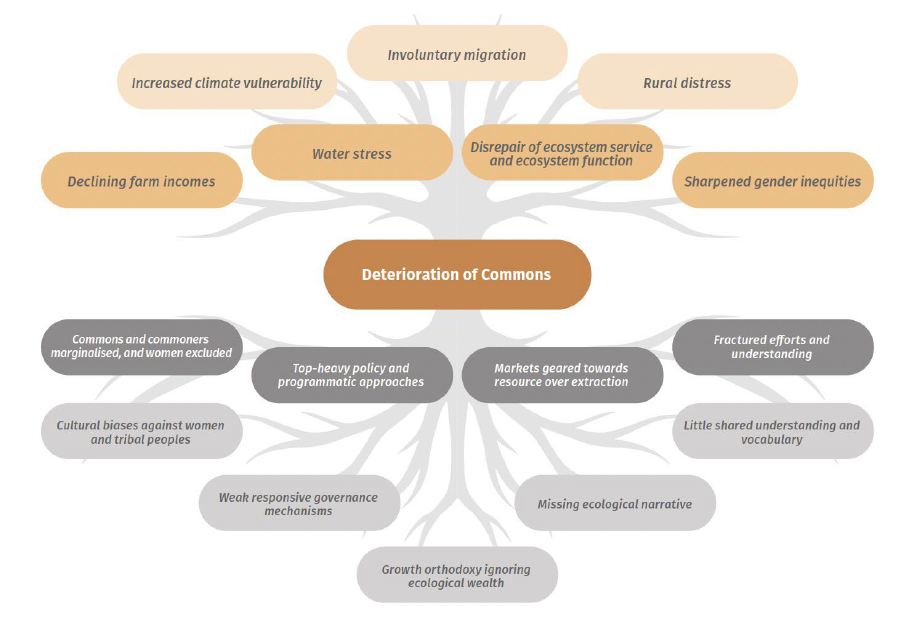
The current development landscape is hindered by deep structural barriers and top – down approaches that fail to address the needs of local communities, particularly women and marginalised groups. This also results in the de-prioritisation of ecological considerations and local priorities. The ineffective protection of collectively held shared resources, coupled with biases against the capabilities of rural populations exacerbates the issue. Moreover, government capacity, private sector incentives, technological reach to the ‘first mile’, and civil society influence are each insufficient to catalyse the change required.
Common Ground recognises the urgency to
strengthen the capacity of the entire ecosystem to tackle these crises effectively through collaboration and co-creation.
The challenge
Despite clear links between the Commons and rural well-being, ecological and community priorities continue to be sidelined in development planning.
India faces a triple crisis of climate, rural livelihoods and equity that has been made worse by the COVID-19 pandemic. Failure to tackle these challenges endangers us all.
#1
Ecological considerations and local priorities – especially those of women and marginalised communities – are de-prioritised in our drive for economic growth.
#2
Collectively held shared resources are not protected by law in the same way that private or state – owned property is.
#3
Many still question the ability of rural people, particularly women, to govern and manage resources.
#4
Efforts by civil society, government, and markets remain fragmented and often at cross-purposes.
#5
Government capacity, corporate incentives, digital outreach, and civil society efforts – on their own – have not been enough to bring lasting change on the ground.
The need for systemic change
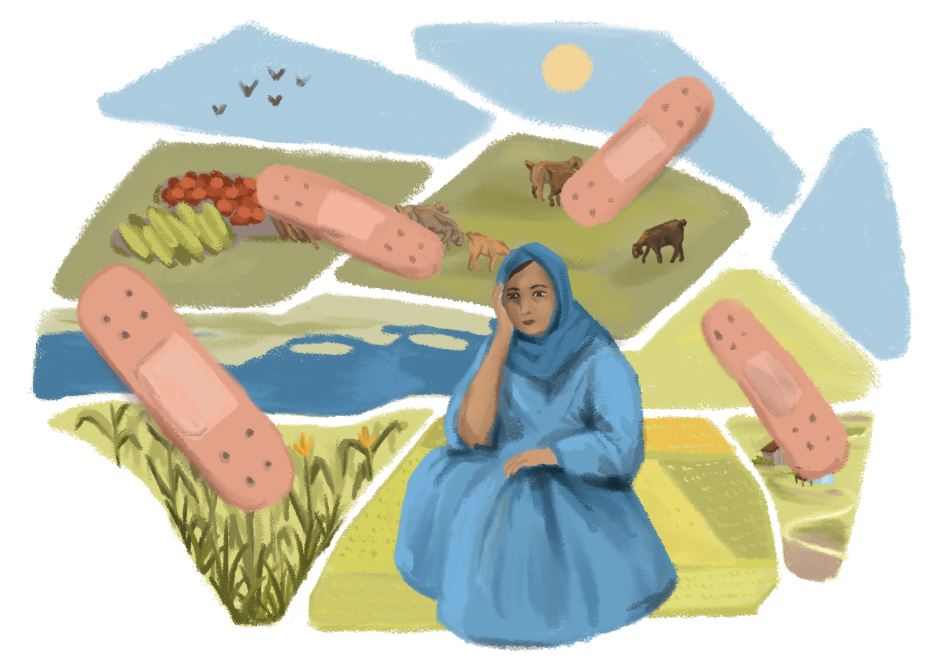
This is not just a matter of mobilising finance but also building the societal infrastructure for collective action, or ‘field setting’. Doing so necessitates a systems perspective, recognising that government capacity, private sector incentives, technological reach to the ‘first mile’, and civil society influence are each insufficient to catalyse change at the pace and scale required. To complement official channels, there must be investment in connecting, convening and dialogue with potential to align diverse actors, even in the absence of full agreement. This calls for an ‘ecosystem approach’ working with aligned initiatives across organisations to address linked challenges of rural livelihoods and environmental governance to nurture large-scale systems change.